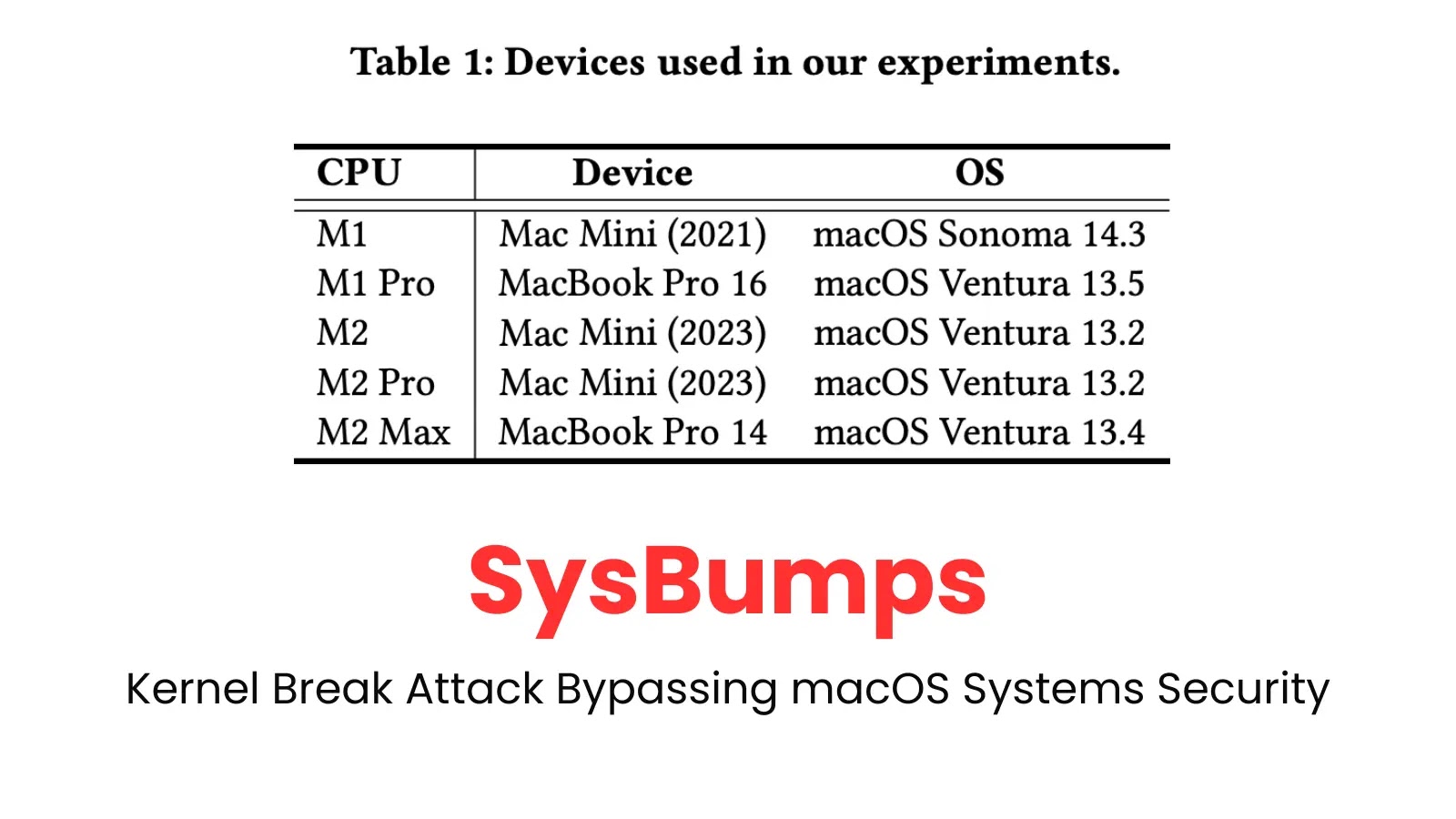
Developers working within macOS environments should take note of these developments, as they highlight the necessity for heightened vigilance and proactive security measures in their applications. With SysBumps demonstrating the capability to penetrate advanced security features, developers may want to reassess their understanding of how speculative execution can be manipulated and the implications for application security.
It’s important to stay updated on vulnerabilities that may affect your systems, as these can directly impact your software’s reliability and safety. Consider implementing tools and frameworks that actively monitor and mitigate the risks posed by speculative execution. Familiarity with the macOS security model is essential, and resources like the Apple Security Bounty [program](https://developer.apple.com/security-bounty/) serves as both an incentive and a guideline for reporting vulnerabilities you may encounter.
Moreover, as SysBumps exploits a critical flaw in widely used operating systems, developers should implement additional layers of security in their applications. This can be accomplished through rigorous code reviews, compliance with the latest security updates from Apple, and leveraging code analysis tools designed to detect speculative execution vulnerabilities.
The evolution of cyber threats signals a growing trend where kernel-level exploits become increasingly sophisticated. Developers should anticipate a future where performance and security are continuously weighed against each other. Adopting a security-first approach in the development cycle may not only safeguard technologies but also enhance user trust in applications.
Regular engagement with official macOS security documentation is crucial. For in-depth technical understanding, you can refer to the [Apple Developer documentation](https://developer.apple.com/documentation/security) which provides guidelines on secure coding practices and features that can assist in mitigating risks associated with kernel-level exploits.
As the landscape of system vulnerabilities evolves, staying abreast of emerging threats like SysBumps will empower developers to build more resilient applications capable of withstanding sophisticated attack vectors.

Editorial Team

Editorial Team
- Cybersecurity , Developer Tools ``` , Threat Intelligencep , Vulnerability Management
- January 10, 2025
- 1036 views
Exploitation of New Ivanti VPN Zero-Day Linked to Chinese Cyberspies
Exploitation of New Ivanti VPN Zero-Day Linked to Chinese Cyberspies Recent reports from Google Cloud’s Mandiant team have raised alarm over the exploitation of a zero-day vulnerability in Ivanti VPN,…

- Cybersecurity , Software Development , Vulnerability Management
- January 10, 2025
- 303 views
Palo Alto Networks Patches High-Severity Vulnerability in Retired Migration Tool
Palo Alto Networks Patches High-Severity Vulnerability in Retired Migration Tool Palo Alto Networks Patches High-Severity Vulnerability in Retired Migration Tool Palo Alto Networks has released important patches addressing multiple vulnerabilities…

