 Editorial Team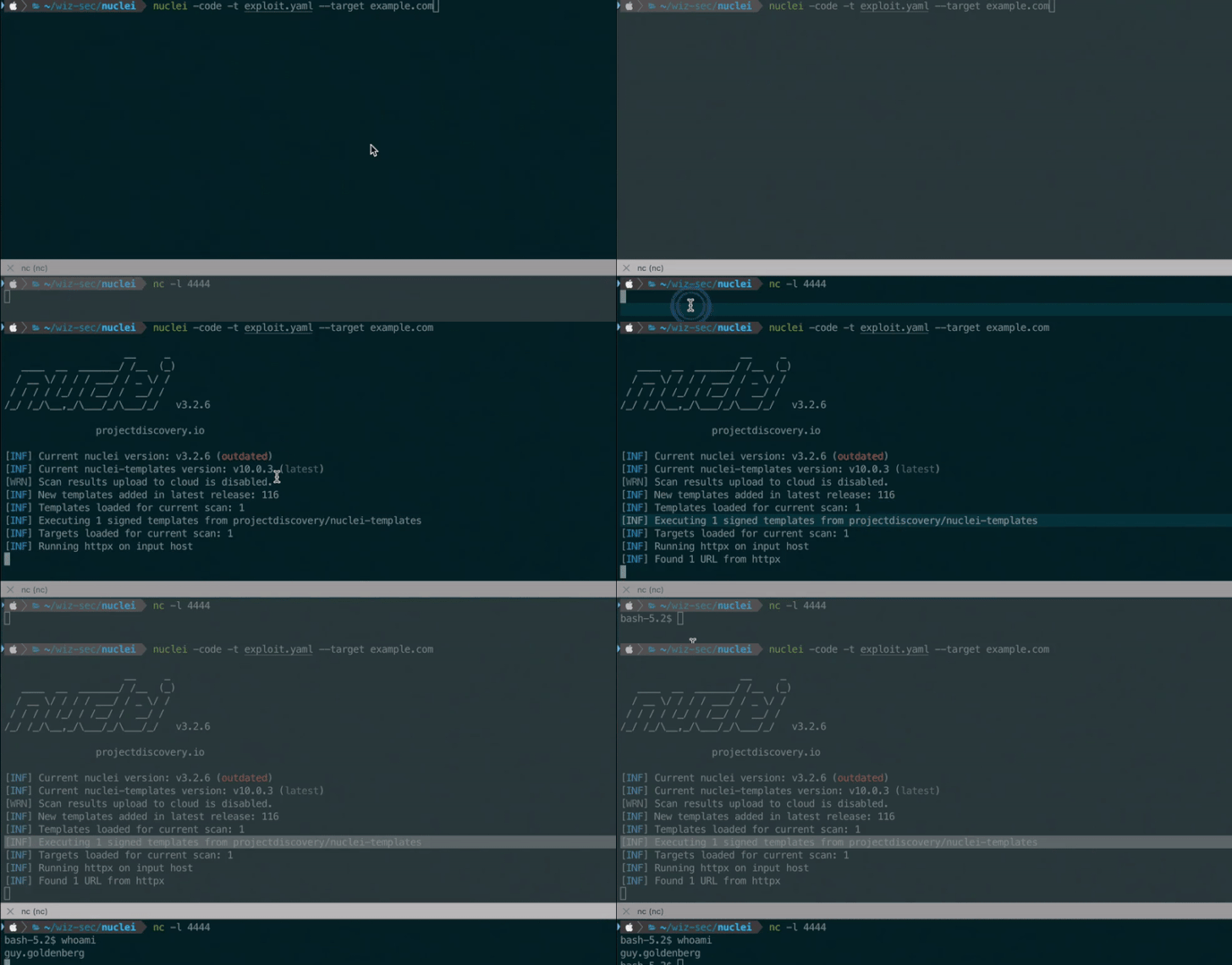
CVE-2024-43405, a newly identified vulnerability within Nuclei, has significant implications for developers working in security automation. This vulnerability allows attackers to bypass defined signatures, thereby enabling arbitrary code execution on vulnerable systems. Developers using Nuclei should prioritize updating to version 3.3.7, where critical fixes addressing this issue have been implemented.
Nuclei has become a favored tool among developers and security practitioners for its templating engine, which facilitates rapid vulnerability scanning. However, with the emergence of CVE-2024-43405, developers must reassess their workflows and ensure their tooling is configured to mitigate risks associated with this vulnerability. The potential for exploitation presents a clear incentive for teams to upgrade and implement additional security measures within their development pipelines.
One practical application of this knowledge is to integrate regular updates of Nuclei into your DevOps practices. This can involve scheduling automated checks for the latest versions or incorporating the update process into your continuous integration/continuous deployment (CI/CD) pipeline. It would also be wise to revisit signature definitions and potentially bolster them to ensure robust detection capabilities against increasingly sophisticated attacks.
Moreover, understanding the nature of this vulnerability can allow developers to better educate their teams and contribute to a security-minded culture. This includes sharing insights on how attackers can exploit such vulnerabilities for code execution, as this enhances the overall defensive posture of the development team and aims to reduce surface-level vulnerabilities in deployed applications.
As more security vulnerabilities are discovered, it is crucial for developers to stay informed about trends in vulnerability disclosures. This awareness can lead to the adoption of better security practices, such as incorporating threat modeling into the design phase and using automated security testing tools to catch vulnerabilities during development. Resources like the [Nuclei GitHub page](https://github.com/projectdiscovery/nuclei) and the [national vulnerability database](https://nvd.nist.gov/) remain invaluable for tracking these vulnerabilities and applying relevant fixes promptly.
In conclusion, with CVE-2024-43405 highlighting significant risks in Nuclei, developers should not only apply the necessary updates but also consider broader implications for security protocols within their CI/CD pipelines. Proactive security solutions and team education will be key strategies in mitigating similar risks in the future.


