Editorial Team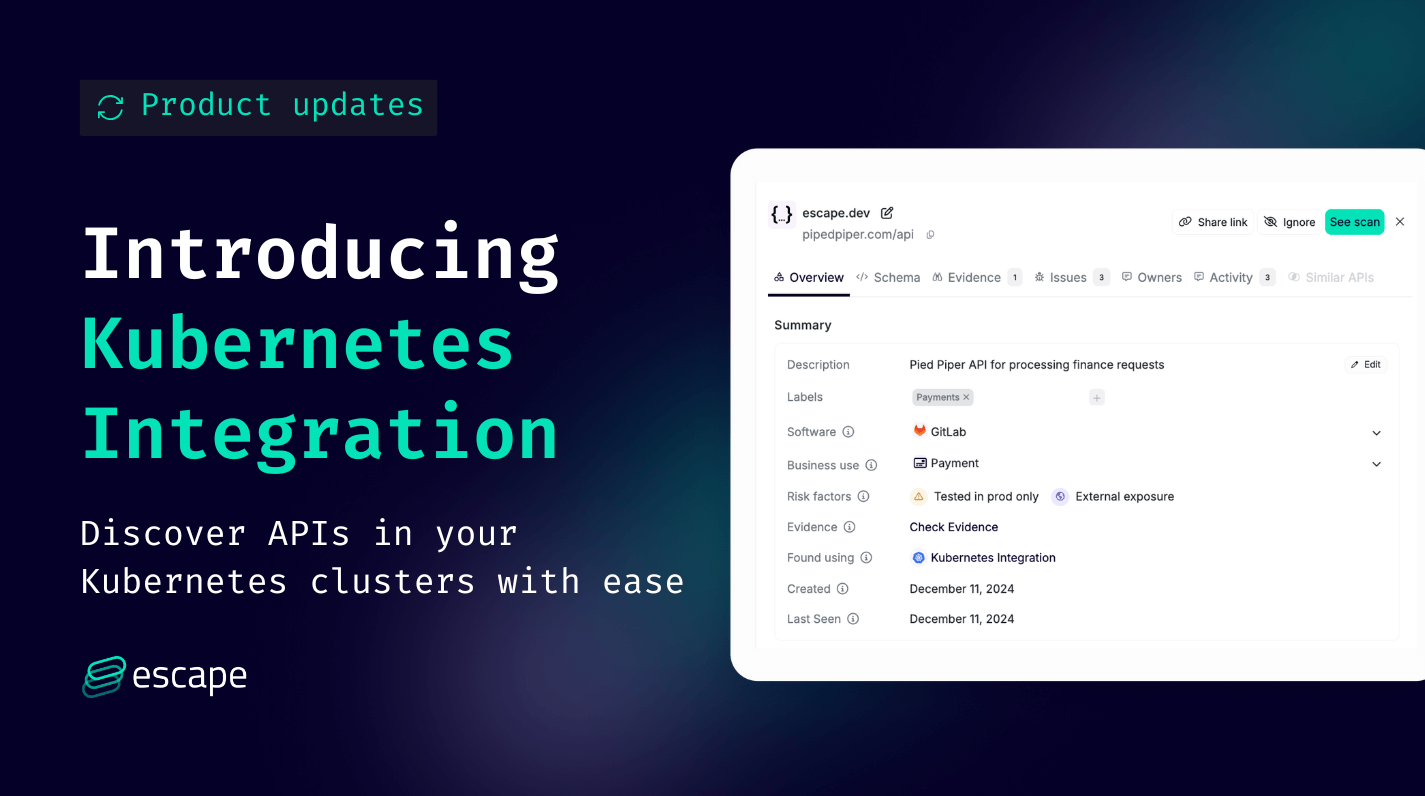
Introducing Kubernetes Integration: Discover APIs in Kubernetes
Identifying undocumented and potentially vulnerable APIs within Kubernetes clusters has become a crucial task for developers focusing on security and optimization. In an era where microservices architecture dominates cloud-native applications, understanding how to discover and manage APIs can significantly enhance both security posture and operational efficiency.
Kubernetes, as a versatile orchestration platform, supports dynamic environments and scalable applications. However, the complexity it introduces can lead to neglected APIs lurking within your clusters. These exposed endpoints can present vulnerabilities that, if left unchecked, might lead to data breaches or service interruptions. Recognizing the importance of API discovery can help developers ensure that these communication channels adhere to best security practices.
To approach API discovery effectively, developers should consider integrating tools that leverage the Kubernetes API to enumerate services and endpoints. By utilizing Kubernetes API resources, developers can automate the identification process for undocumented APIs. This is not merely a preventive measure; efficiently mapping your API landscape allows for better governance and compliance with internal and external regulations.
Moreover, employing tools like Kube-Hunter and Kube-Bench can enhance the vulnerability assessment of your Kubernetes clusters. These tools can scan your deployment for common misconfigurations and security issues, enabling you to proactively manage the risks associated with your APIs.
As developers integrate these practices, they should also keep an eye on trends in the Kubernetes ecosystem. There’s an increasing emphasis on GitOps and Continuous Integration/Continuous Deployment (CI/CD) pipelines, which involve codifying infrastructure and application deployment. By incorporating automated API discovery techniques within your deployment pipeline, you can ensure that any introduction of new services or versions undergoes thorough security assessments.
Looking ahead, we expect that the rise of service meshes, such as Istio and Linkerd, will also aid in API management. These technologies can offer enhanced observability and security features, making it easier for developers to monitor and control traffic across services, including undocumented APIs. This aligns with the growing movement towards zero-trust architectures, where every API call is verified and logged.
In conclusion, as you refine your Kubernetes practices, focusing on API discovery and vulnerability management is essential. This not only secures your applications but also fosters best practices in software development. Equip yourself with the right tools and integrate these methodologies into your workflows to stay ahead in the ever-evolving landscape of cloud-native applications.